Saturday, October 5, 2019

How to Crate Train Your Puppy

Image result for Teach a Dog To Swim

One of the most difficult hurdles that any new puppy owner faces is housebreaking or as it is sometimes also referred to; potty training or doing business. Although there is no tactic that comes with a 100% guarantee, one of the most successful methods is crate training. Crate training can drastically reduce the amount of stress on the owner and the puppy that often comes with training the new four-legged member of your family.

So what is a crate? It is a cage that is usually made of plastic or wire. Wire ones are collapsible and the puppy has a great view of his surroundings. The plastic crates are lightweight and easy to clean and tend to be the most commonly used. Either can be purchased at a department or pet store. When purchasing a crate you must make sure there is enough room for the puppy to stretch right out and to stand erect. Make sure the crate is not too big though or all your potty training efforts in vain because the puppy will be able to do her business in one end and sleep in the other.

Crates can also be used for a variety of other things than just potty training. It provides the "den" security that can be traced back to their ancestors. It provides a place that is safe and cozy for the puppy. Putting the puppy in the crate when there is company or a lot of activity going on it saves her from all the reprimands from getting in the way. It is great for travelling. When you have to leave the puppy home putting her in her crate will save you from coming home to a disaster. It is also great for your puppy to sleep in through the night without the owner having to worry about her roaming around and possibly injuring herself. Puppies however, should NEVER be left alone in their crate for extended periods of time.

What makes the crate method of potty training so effective is because a puppy will not soil where it sleeps. However if you leave the puppy in the crate for too long it will have to do business and you will set your potty training efforts back to the beginning. The most important things you need to remember about crate training are consistency and routine and lots and lots of rewards. A crate is used differently to potty train then if you have to go out and you are leaving her home alone. When you are leaving your puppy home you have to put the crate in a small area, for example a bathroom and leave the crate door open with newspapers down for the puppy to do her business. Once the puppy is older and has good bladder and bowel control you can leave it in the crate but preferably not longer than 4 hours. However for potty training your puppy should stay in the crate then taken out frequently to the area that she is suppose to do her business. This can be either outside or on newspapers. For a very new puppy take her out to do her business every half-hour then after 8 weeks every hour. When the puppy goes potty where she is suppose to you can reward her with treats and lots of praise and maybe leave her out to play for awhile before putting her back in. If she does not go within around 10 minutes just put her back in her crate and try again later. If you keep a record of when your puppy goes, for instance how long after she eats or naps then you will know when to let her out and she can have more and more time left out to play. The crate will also help puppies learn bladder and bowel control.

A great idea is to either say something like "go potty" or "do your business" when you put her outside or on newspaper then when she hears those words she'll know it is time to go out. Also if you have something for her to scratch or ring or push she will learn as she gets older that that is what she needs to do to let you know that she needs to go out. Puppies want very much to please you so training them, as puppies will make things much easier for you and her as she gets older.

Of course when the puppy is initially introduced into the crate there will be lots of whining. This is not the sort of behavior you want to encourage or reward with attention. When she quiets down then you can take her out for a little playtime but the whining should be ignored. The crate should be kept in an area where she will not be alone and can be part of the family then at night take her into the bedroom with you. Be sure to have a soft blanket and a snuggle toy in the crate with her. I often put a blanket over the crate to give the puppy a very secure feeling. In the beginning you will have to get up a few times during the night to let her out but take a deep breath (or a nap) because this really will not last forever. I have seen puppies sleep through the night at 8 weeks.

Successful crate training requires commitment on the part of you the owner and it definitely is work. However, the reward in the end will make it more than worth the effort.

Labels:

Teach a Dog To Swim

Image result for Teach a Dog To Swim

You want your dog to swim?

We're going to try to give some advice on how to teach a dog how to swim and some general safety issues. As always check with your vet on any medical questions.

Teaching a dog to swim:

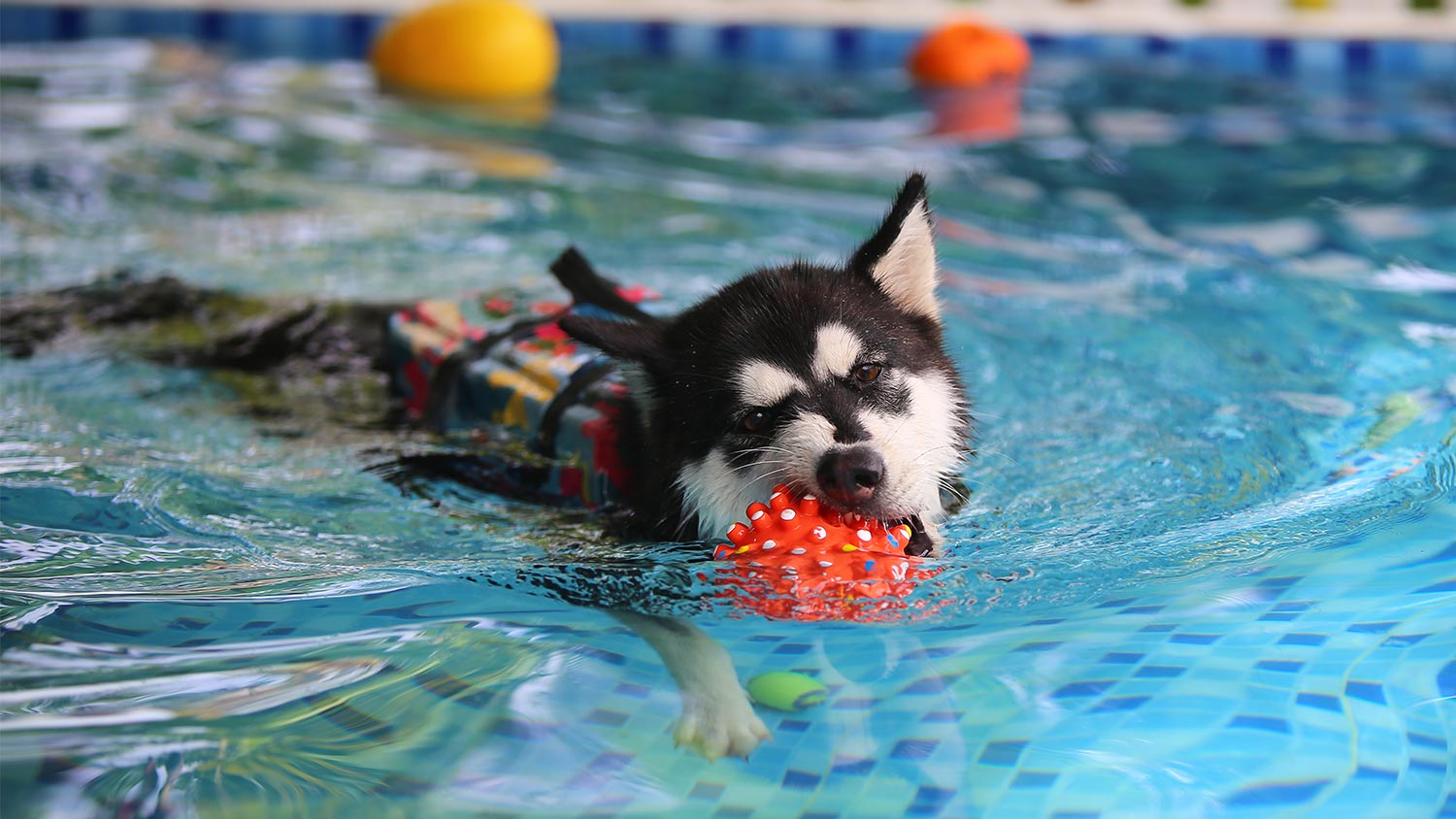
I would suggest starting your dog out in a pool or shallow lake where you can enter the water with your dog. Many dogs will be more confident if you are standing with them if they are nervous about venturing out on their own. So by walking out, you can build their confidence before letting them go on their own. Bring a favorite toy with you and encourage them out further by tossing the toy short distances and swimming over to it.

Some tips:

Bring another dog who knows how to swim along to help encourage your pet to try.

There are life vests (life jackets) you can purchase to aide in teaching your dog. These usually have handles that you can hold onto easily and are helpful for getting a dog back into a boat.

Water Freaking

Here is a common problem. Your pup goes off and won't come back. You have two choices, swim out and get them, or wait until they get tired and come back. Never let them off leash and away from you until you know for a fact they will return or start in shallow water where you can go get them should you need to.

I use a two toy approach to retrieving and swimming. I always keep one close by so I can toss it near me. Try to make a lot of noise to get their attention and toss it into the shallow water. Tennis balls are not the best choice as they can get lodged in the throat blocking the airway. I really like kong retrieving toys or retrieving bumpers.

Afterwords, make sure you RINSE your dog with fresh water to get out any bacteria or chemicals. You can also rinse your dog before hand to help the water not absorb into the coat hair.

Labels:

How to Play Safely With Your Westie Puppies

Image result for westie puppies

Just like children, westie puppies learn through play. Playing games with your west highland white terrier pups creates an opportunity to train them to obey your commands, gives them valuable exercise, and helps to build their strength, coordination, and agility. It is also fun for everyone.

Before you start playing games, there are some rules you should know, and safety precautions you should take. Your pups need to really run, not just walk on a leash, but be sure any area you play in has a fence. If they are city dogs, try finding a fenced-in tennis court for play. As a last resort, keep the puppy on an extra-long line. You do not want them to wander free until you are certain they will return on your command.

Never encourage your west highland pups to jump. The young bones are fragile, and not able to bear the stress of jumping until the growth plates are fused. Games like Frisbee, or serious agility training, are for older dogs, although there is still much you can do with your westie puppies by having them working at ground level. If you are eager to start these kinds of games, at about one year of age you can take your westies to their veterinarian for an x-ray, to see if the growth plates are completely fused.

Westie pups first learn to play in the litter by roughhousing with their littermates, but at six to eight weeks, the mother westie begins to discourage this behavior. You should discourage it as well, by never roughhousing in ways that allow them to bite, nip, or claw at your hands. A nip from a puppy may seem harmless, but if a full-grown westie nips, you have a behavior problem. It also teaches them that they can dominate you through aggression. If they do manage to get a nip in during play, discourage it in the same way dogs do, by imitating a 'yelp' sound.

Always remain in control with your pets. You want to teach them you are the 'alpha-dog.' Towards this end, never reward them by chasing after them when they run away from you. Instead, 'hide' from your pups, making them come after you. Tug of War games are good, but never allow the dogs to take the tug toy from you. You should be in control of it at all times, deciding when to end the game by taking it from the dog with a 'give' command. Never allow your west highland terrier puppies to grab a ball or other toy from your hands.

(Disclaimer: Any information contained in this site relating to various medical, health and fitness conditions of Westies or other animals and their treatments is for informational purposes only and is not meant to be a substitute for the advice provided by your own veterinarian. You should not use the information contained herein for diagnosing the health of any animal. You should always consult and check with your own vet or veterinarian.)

I do hope that you have found the article of use to you.

Good health and happiness

Labels:

My Dog Won't Stop Digging - What Can I Do?

Related image

Lonely, bored, tired of eating that same old stick, then maybe you would like to dig yourself a hole.
When it comes to the canine thought process this could be the reason why Scraps keeps tearing up your finely groomed lawn. This article will help you find the behavioral reasons why your dog digs and offers some suggestions on how to stop your companion's pesky habit.
First and foremost as an owner don't go placing blame on your good friend until you are sure it is their fault. A good way to find out if your dog has been digging is to check its paws and nose for soil or pica. This is a good indicator to see if they have been eating dirt. In this case consult a veterinarian because there are all kinds of nasty bacteria in dirt that can affect your dog's health. Another full proof method to find out if your animal is the culprit is to hold yourself a stake out and catch it in the act. Don't start correcting the problem until you are sure it is your animal causing the problem. Otherwise you might cause the dog more anxiety than it has already endured from watching some other animal dig up its master's lawn.
Once you have assessed that it is your dog doing the digging then you need to find out why it is digging. It is instinctual for dogs to dig for a number of reasons: boredom, loneliness, animals in the yard, to cool down, or just for fun. First you can judge by the nature of the whole and where it is located why your dog is digging. If your dog is digging next to the house or in shaded areas then it is probably too hot for it. If it continuously digs up the same spot in the yard then it is most likely a foreign animal and you should thank it for the early warning--gophers and moles can be a gardener's nightmare. If the placement of holes is sporadic then it is not receiving the stimuli or attention that a dog needs.
After you've come to a conclusion why your dog is digging then you can try some of these suggestions to help thwart its efforts. If it is an animal causing the problem then you should call an exterminator or animal control to handle the matter. Building a dog house or adding a pet door can give the animal the comfort level it needs while you are away. The more difficult digging scenario to mend is the digging out of boredom or digging for fun case. Do not, I repeat DO NOT, physically punish your dog as this will teach the animal nothing except disrespect for humans which can lead to biting and other misbehavior. If your dog is digging out of boredom try giving it a tasty alternative such as a rawhide bone. It is a common misconception that dogs bury their bones. More likely if they are digging for a bone it is because they can't remember where they left. So give them the treats where they can find them easily. If toys and chews don't work then try exercising your animal more often throughout the day. It could be that they aren't expending enough energy and need some kind of outlet. If these simple methods do not work then you might have to get creative. One method is to bury a piece of chain link fence where the dog has been digging--it will not like this rubbing against its paws. You can also bury a balloon or sneak up on it with a paper bag; the popping will work as shock therapy. Other suggested methods are burying the dog's feces, mousetraps, or moth balls to deter the animal.
In my own personal opinion the best way to keep the mischief down in an animal is to give them more love than they know what to do with. When you leave them alone they will more curious as to when you will return than with anything else.

Labels:

Putting A Dog To Sleep

Image result for Putting A Dog To Sleep

I was talking to a friend of mine today and I asked him how his kids (dogs) were. He lives on his own and the standing joke is - "does he want to do a swap with his dogs and my kids?"

He informed me very sadly that he had to get the older dog put to sleep. I knew the dog was quite old, but I knew from his expression and my own experience that it had been a hard decision.

He had stayed with the dog, stroking and talking to him as the vet administered the injection. I was surprised at my reaction, because it immediately brought back memories of my last dog being put to sleep. It surprised me that it still hurt after all this time.

I have found that non-dog owners think you are a bit barmy for reacting with a lot of emotion to a dog's death. They tend to forget that the dog ( or any other animal) was part of your family.

If dogs could talk what stories they could tell.

I remind you of a beautiful prayer called "A Dog's Prayer". It is by Beth Norman Harris. "Treat me kindly, my beloved master, for no heart in all the world is more grateful for kindness than the loving heart of me.

Do not break my spirit with a stick, for though I should lick yourhand between the blows, your patience and understanding will more quickly teach me the things you would have me do.

Speak to me often, for your voice is the world's sweetest music, as you must know by the fierce wagging of my tail when your footsteps falls upon my waiting ear.

When it is cold and wet, please take me inside, for I am now a domesticated animal, no longer used to bitter elements. And I ask no greater glory than the privilege of sitting at your feet beside the hearth.

Though had you no home, I would rather follow you through ice and snow than rest upon the softest pillow in the warmest home in all the land, for you are my god and I am your devoted worshiper."

(Disclaimer: Any information contained in this site relating to various medical, health and fitness conditions of Westies or other animals and their treatments is for informational purposes only and is not meant to be a substitute for the advice provided by your own veterinarian. You should not use the information contained herein for diagnosing the health of any animal. You should always consult and check with your own vet or veterinarian.)

Until next time, good health and best wishes.

Labels:

Tuesday, September 24, 2019

Important Considerations Before Buying a Puppy

You have always wanted a dog. Perhaps you have retired and fancy taking long walks with your new best pal. Or perhaps the kinds have been pestering you to get a puppy and you have finally caved in. But before you rush out to make the kids' wishes come true, there are some important questions to ask yourself to be sure you know what you are getting in to.

What breed of dog best suits your circumstances and different breed of dog have different needs of their own.

You have to strike that balance. For example if you live in a small apartment going out to buy a Saint Bernard puppy probably isn't the smartest move. Instead, say a Jack Russel would be more suitable.

That cute new puppy will need lots of looking after and training. Who will do that? Do you have the time, are you able to take time from work, can your partner and/or kids put the time in.

Tough questions to ask yourself but ask you must and be honest with yourself. Do your circumstances really lend themselves to puppy ownership?

Other considerations to take in to account include grooming and feeding. Long haired breeds take more grooming. Big dogs eat more food. And more food means more expense. Think also of the cost of owning that puppy.

It's not just the cost of feeding either. Other ownership costs can add up. For example bedding, collar, lead, toys and similar.

Another consideration is insurance to cover vet bills. Different breeds of dogs tend to have health issues specific to their breed. Consider the risk here too. Do your research in to this so you are aware of the potential issues which may arise as puppy grows in to an adult dog.

And of course ask yourself, really ask yourself, if you have the commitment which dog ownership demands of you. Do you have the fortitude to take your dog out for a walk before bed time in any weather? Sun, rain or snow, your dog needs exercise.

I suggest taking advice from a local pet store and if possible a vet before you buy that puppy. Listen to what they have to say about what breed of puppy might best suit your circumstances and how best you might prepare your home first.

The pet store or vet may also be able to offer advice on local breeders from whom you might acquire your puppy. I suggest visiting the puppy a time or two at the breeder's premises and ideally seeing puppy with its mother. And before you buy, check any paperwork which may be required. A local kennel club is another source of advice.

Owning a puppy is a very rewarding experience, however please carefully take in to account the important considerations we have taken a quick look at here before you take the plunge.


Labels:

Sunday, September 22, 2019

Reasons You Should Get a Bed for Your Dog

A dog is a man's best friend, we have all heard that. But that best friend of ours deserves a small space of his own. It is not just for comfort but has so many more benefits. The following are some of the benefits.

- Cushioning for joints and bones:

When the dogs get older, a comfortable spot of his own would be very helpful. This is especially beneficial in case of overweight or arthritic dogs. Dog beds would give them extra support and cushioning for joints.

- Private spot:

You can have one or more dog beds. That way the dog has his own spot in the house where they can get privacy. Your dog will love that. We all love privacy; our furry friends deserve a private spot too.

- Protection and security:

The dogs can fall asleep anywhere but is that good for them? They might get cold or fall ill if the spots they sit or sleep on aren't clean. Having dog beds would ensure that they are well protected and secure.

- Insulation:

Now how would you feel if you had to sleep in a cold weather without a blanket? You would freeze, right? The dogs are furry but it's still important that they are warm and comfy. Dog beds provide them with insulation for warmth and comfort. It ensures their good health.

- Injury Prevention:

It's impossible to keep dogs from jumping on furniture when they try and find a good spot for themselves. This can often lead to injuries. If you have a smaller breed you know how delicate they are. If you have a dog bed, you will be able to prevent any kind of injury.

Kinds of dog beds:

Yes, you read that right. There is a variety of dog beds. They can be divided into three kinds.

- Super Support Beds
- Lounging Beds
- Nestling Beds

If you notice your dogs while sleeping, it will give you an idea of what kind of bed is suitable for them. Ever noticed how dogs fall asleep on sofas, beds, and cushions? They yearn for comfort. Some dogs like to curl up, some like to sleep on their tummy, and some like to stretch out. These are the clues that help you decide on the type of bed they need. It's time to give your furry little friend a bed that makes them comfortable and happy. Have you noticed any such clues? Let us know.


Labels:

Thursday, September 19, 2019

Things You Should Never Feed Your Dog


Sadly, there are several household items which we tend to take for granted that are potentially very hazardous to your dog's health. It is especially important to be aware of this because as you know, dogs are very much scavengers and will often eat whatever they can sink their fangs into. I would say that may own dog is more like a mobile garbage disposal. It is also very important to be aware of
these items since their sense of smell is so well developed that your pooch will be able to find what you may think is well hidden.

One of these dangerous household items, it turns out, is simple chocolate. While chocolate has been reported recently to be high in human-friendly antioxidants, it appears to be potentially lethal for our pets, and particularly for our dogs. Cats are mostly unaffected since they do not care for the
taste of chocolate, but dogs tend to be crazy about it. Certain breeds of dogs react indifferently to chocolate. The root of the problem is that chocolate contains various chemicals which are called methylxanthine alkaloids(sometypes have more of these chemicals than others)

Sadly, relatively minuscule amounts of these chemicals are capable of causing such serious problems as constriction of the arteries and an increased heart rate. Large amounts may cause even more dire symptoms and a pound of milk chocolate could possibly kill a sixteen pound dog. If you find that your dog has eaten chocolate then by all means take note of the it's type and try to estimate the amount eaten. Then get on the phone with a veternarian or an emergency facility. Be sure that your
children know how important it is to keep chocolate out of your dog's reach.

If you are not aware that your dog has consumed chocolate, the consequences could be severe. If consumption is not found within 4 to 6 hours without the right treatment, cardiac failure, seizures, coma and death could result, according to veternarian Dr. Jane Bicks. In addition to seemingly innocent chocolate, there are a number of other common household items that may seem safe for our dogs but that can be downright dangerous.

Some mushrooms, for example, can produce abdominal pain, liver andd kidney damage and amenia. So be aware of wild mushrooms when you are out walking your dog in wooded areas. Garlic may seem benign but can cause vomiting, liver damage, anemia and diarrhea so do not give your pet baby
food since it can contain garlic.

Anti-freeze can shut down your dog's kidney and they tend to love the taste. Miscletoe can cause vomiting, abdominal pain and depression. Onions can causeliver damage, anemia and diarrhea. Onion can also sometimes be found in baby food. Cats are actually somewhat more sensitive to
this one so keep out of the reach of both.

Coffee, like cocoa, is especially dangerous, and may cause heart rate increase, diarrhea, seizures, coma, death. Caffeine just does not have the same effect in dogs.

When outside be careful around apple and cherry trees. While the fruit is safe, the leaves and roots are not.

And be very careful about Moth Balls. it's primary chemical naphthalene is extremely toxic to dogs and can result in tremors and seizures. Concerning dog food, you should be looking for dyes and other chemicals, according to Dr. Jane BHA, for instance, which is one of the main synthetic antioxidant preservatives used to prevent food discoloration, has been observed to cause cancer in laboratory rats at certain doses. Small doses are as yet unclear but since dog food is eaten every day caution is advised. Many conventional dog food brands have large quantities of sodium to make them palatable, and this can be quite harmful to a dog. Other ingredients to wary of are dairy, by-products, chemical preservatives and artificial colors.


Labels:

Monday, September 16, 2019

Big Dog Breeds


with an active, large dog breed can become an exceptionally satisfying experience. However, while a big dog breed can become ideal for countless people; the owners who are potential must be well-known about many different considerations including health issues and lessened life expectancy of countless large dog breeds. We take a look at eight of the most famous big dog breeds and what you require considering if you are considering to buy one...

Newfoundland
Characteristics: Newfoundland dog breed is a strong, large dog that makes a great pet for the family. He was initially utilized as a working dog to pull wood or nets of fisherman for lumberjacks, he is a brilliant swimmer.

Health issues: The Arteria Cruciate Ligament's rupturing can sometimes be found in the breed. Relying on the level of seriousness, this kind of injuries can result in surgery, making having the right dog insurance crucial. Newfoundland dog breed can sometimes suffer more dangerously from Gastric Torsion. This turns out to be a life-threatening condition whereby the stomach stretches because of an increase in gas and can result in the stomach twisting. It is mainly found in large dogs that have deep chest.

Great Dane
Characteristics: The Great Dane dog breed is a regal dog with real beauty that has an aura of nobility due to result of his tall stature of up to 86cm. He is something of a gentle giant and enjoys spending time with his people.

Health issues: While his size was an asset for his original purpose as a hunting dog, it can be harm to his health. Like the Newfoundland as well as suffering from Gastric Torsion, the Great Dane dog breed is also at higher risk of bone cancer than a smaller dog. The signs and symptoms include lameness which, if you notice in your Great Dane, means you ought to take him immediately to your veterinarian.

Irish Wolfhound
Characteristics: This enormous dog 86cm tall in size and made him ideal for his conventional roles of pulling and hunting men off their horses in wars. This shaggy-haired dog has the ability to make a perfect family pet for many thanks to his capability to create deep bonds with his owner and his desire to be involved in every aspect of family life.

Health issues: Owing to the size of Irish wolfhound dog breed, he can also be vulnerable to suffering from bone cancer, hip dysplasia and elbow dysplasia. Other conditions that can affect this breed, they include heart disease caused by the heart muscle getting thin and becoming unable to contract in a proper way.

Bernese Mountain Dog
Characteristics: The Bernese mountain dog belongs to Switzerland whose is very tall up to 68cm in size, makes him ideal for his conventional roles of helping to pull carts and herd cattle. With a sweet-natured disposition and long hair, he is a welcoming and warm family pet.

Health issues: The Bernese mountain dog is a healthy large breed of dog as compare to others, but an owner ought to note the possible conditions which can result from his size. Those conditions include Elbow Dysplasia that is a degenerative disease sometimes found in large dog breeds.

Rottweiler
Characteristics: The Rottweiler dog breed is found in a medium to large size. The breed was originated in Germany, where he was utilized to pull carts and herd cattle for butchers and farmers. He is mentally and physically tough, but needs careful training to respect his owner as 'pack leader'.

Health issues: The Rottweiler is one of the dog breeds most affected by hip dysplasia. This condition can range from mild to serious. Serious cases are very painful and usually need surgery to correct. The dog is also among the breeds who suffer from a congenital heart condition which is also called Aortic Stenosis.

Leonberger
Characteristics: A cross between a Saint Bernard, a Newfoundland and Great Pyrenees it is no surprise that the Leonberger dog breed can be tall up to 80cm. He enjoys remaining around people and requires roughly an hour for exercise every day like many other giant dog breeds.

Health issues: The size of Leonberger increases the risk of getting afflicted by Panosteitis (bone inflammation) and hip dysplasia. It happens when the large bones of the young dogs' legs become inflamed, making it extremely painful for the dog to move or walk around. With Leonberger dog breed as with every other dog, it is crucial to possess the right dog insurance to make sure your dog is covered and you can enjoy spending your time with any large dog breeds.

Golden Retriever
Characteristics: The Gundog was created to flush out, locate or retrieve game that shot down by hunters. He is often greatly trainable, keen to amuse and has a pleasant and a balanced temperament.

Health issues: Some of his minor health issues include sub-aortic stenosis (SAS), hypothyroidism, elbow dysplasia, eye disorders, seizures, and mast cell tumours. You can also find osteosarcoma occasionally in Golden Retriever dog breed. The other big problems of health for the dog include canine hip dysplasia (CHD), lymphoma, skin problems, and hemangiosarcoma. To recognize such conditions early, a veterinarian may advise heart, thyroid, hip, eye, or elbow tests during routine checkups.

German Shorthaired Pointer
Characteristics: This German Shorthaired Pointer is really large hunting dog and is very tall up to 66cms. He has an abundance of stamina and energy. Ideally, he will need exercise for more than two hours a day with a great deal of free running.

Health issues: This dog breed is vulnerable to minor health issues like hypothyroidism, gastric torsion, canine hip dysplasia (CHD), von Willebrand's Disease (vWD), Osteochondrosis Dissecans (OCD), pannus, and entropion, and major concerns like lymphedema. Other issues which can be occasionally found in the dog breed include ectropion, cardiomyopathy, and progressive retinal atrophy (PRA). To recognize some of these problems, a veterinarian may advise regular cardiac, hip, thyroid, and eye exams, and tests to verify vWD.

Labels:

Friday, September 13, 2019

Physical Activities For Dogs

Everyone wants their pets to be fit and healthy. As wonderful as dogs can be, they are famous for missing the point. Dogs are not our whole life, but they make our lives whole. There are many games and exercises that can contribute to the fitness of your pets. These activities will not only make them fit, but will also bring an excitement in both of yours lives.

Walk With The Dog - Instead of walking your dog, have your dog walk you. Go wherever your dog goes. It can be great exercise for you as well. You can also go for runs, which can increase your as well as the dog's stamina.

Tracking Clues - Not all dogs are tracking breeds, but just about any dog can participate in the sport of tracking, a competitive event for dogs and handlers. A scent trail is laid out hours before competition. Numerous clues are left for the dog to follow through and something as a reward is placed at the end of the trails.

Playing With Other Dogs - The best form of activity is the one where dogs can naturally move their body. Playing with fellow dogs can be one of them. They'll not only exercise but also enjoy the time.

Teaching Fun Behaviours - Mental exercises are always the best. You can teach your dog exercises like high-fiving or bowing or command by hand. After obedience commands have been taught, cognitive challenges tend to drop off.

Dancing With Your Dog - A dance routine can really cheer you and your dog up. This can energize you and your dog as you both dance away to your favourite tunes.

Indoor Agility - You can set up a makeshift agility course in your house with things like chairs and broom poles (jumps), a mat (for a makeshift pause table), cones or boxes (weave poles), and blankets over the space between the couch and the coffee table (tunnel). Or you can buy an indoor agility set. Either way, it is very useful.

Hide and seek - You can have great fun playing hide and seek with your dog. Put your dog in stay until you can hide and then call him to find you. It can also enhance the dog's mental abilities.

Stairs - One of the most effective exercise for your dog indoors. Make it go up and down the stairs to burn those extra calories.

Labels:

Monday, July 29, 2019

Puppy Training Tips: Stop Puppy Nipping

Puppies have sharp teeth. And as they instinctively use their mouths to explore and taste things (including you) and when playing, those sharp teeth hurt when puppy takes a nip at you with them. You are going to get nipped by your new puppy. Accept that as a fact. However there are steps you can take to discourage them from doing so and protect yourself from scratches and cuts from those sharp little teeth at the same time.

Given that nipping is natural for puppy to do - for example they do it to their siblings as part of growing up and developing - so one step to take is to try to socialise your puppy with other dogs.

Let them do what comes naturally to them if possible. You may then find that they are calmer when back in your company as they've had their fun with the other dogs and are them less inclined to take a nip at you when they think they are playing and see you as a dog substitute.

There's another beneficial by-product of mixing your puppy with other dogs. Puppy will learn how to interact with their fellow canines which can help when out for a walk for example because puppy has picked up essential doggy social skills.

Just as you and I played with other children in the area when we were young and learned at the same time, you can allow your puppy to do the doggy equivalent.

Another method you might use to help reduce puppy's tendency to take a nip at you is to build correct behaviour in to your regular training routine and general interaction with your puppy. Basically, encourage and reward good behaviour but do not punish bad behaviour.

Whilst that may sound like a contradiction, it's really not.

If you do punish puppy for bad behaviour, expect retaliation. Puppy does not know why they are being punished and they will (forgive me a slight pun) bite back - quite literally - with those sharp teeth and take a nip at you because they see it as an attack and it is their instinct to fight back. Well, wouldn't you?

When puppy decides it's time to take a nip at you, instead of getting yourself worked up, shouting at them or (even worse) hitting them (please don't do that) try ignoring them until they stop, gently but firmly put them back on the carpet or even in their bed.

Then when they do stop, are back on the floor, in their bed etc. give them lots and lots of praise.

By doing this, you are teaching puppy that when they nip they do not get your attention until they have stopped.

And when they do stop they get your praise. Much more fun for puppy. Taking these simple steps should help to reduce puppy's nipping instinct and you will have a better trained, better behaved puppy as a result.


Labels:

Simple Things You Can Do To Improve Your Dogs Behavior

There are approximately 87.9 million pet dogs in the USA, according to some estimates. Many of these dog owners would like to improve their fury friends behavior. There are some simple things you can do to improve your their behavior. Lets consider some common dog behavior problems many owners are confronted with and how to solve them.

One of the most common problems is excessive barking. To solve this problem it is important to understand why dogs bark. There are a number of reasons: to initiate play, warn of danger, threaten intruders, discipline their your or because they are curious about something. All of these are normal reactions and to be expected. To train him to stop barking for the wrong reasons, you could praise him when stops barking and give him a treat. Keep repeating this process until he only barks when you tell him to "speak". Your dog will soon catch on that being quite gives him a treat.

Another problem is begging at the dinner table. To stop this behavior you have to discourage him from doing this. One way to do this is to put some of your food into his dog bowl. This will keep him away from the dinner table and help your dog to understand he should only be eating from his bowl. Only give him scrapes that are healthy for him. Your fury friend must be conditioned to eat from his bowl and understand that this is the best place to find food.

Many dogs pull on their owners lease when going for a walk. It is important to take your dog for a walk at least once a day, but their constant pulling on the lease can be very annoying. They often pull in a certain direction because they see something that makes them curious, like another dog. To help solve this problem be aware of other dogs and shorten up his lease when he becomes aware of other dogs. Some owners will always keep their dog on a short lease. I don't agree with this. Take your dog for a walk using a retractable lease. It is import to stop and let him smell things that interest him. It is very important that he knows he can do this, after all it is time out of the house.

Improving your dogs behavior takes patients. However it is worth it. But remember much of their behavior is normal and should not be discouraged. It is important that we understand why they are behaving in a certain way, after all we're suppose to be the more intelligent one.


Labels:

Different Ways Your Dog Is Trying To Communicate With You and What This Means

Dogs have their own special way when attempting to communicate with their human friends. They will bark in a certain way to get their humans attention. Some will jump on their human friend if they haven't seen them for a certain time.

With most dogs being away from their best friend is a very lonely experience. When they see their human friend at the end of the day they will react to this. Your dog is very aware of your presence and will be very affectionate if he or she has not seen you for a long period of time.

Dogs have different ways of showing their affection and actually use body language to convey their feelings. You dog will display these actions as way of getting your attention. They will also display a pattern which often involves play. They will often bark at you in a low voice when they feel that you are not giving them proper attention. This attention often requires petting them often which lets them understand that you are not going away.

Dogs use various movements and body positions to communicate their feelings.just as humans do. Their body language is more obvious than humans. Many humans are unaware of the body language they are conveying. Dogs use body language on purpose as they can not speak in words. Body language is a form of non-verbal communication. This means your dog can express his or hers intentions through their body movements and position such as lying down in a certain way. Of course how you interpret their body language depends on how well you know your dog and the behavior of dogs in general.

Dogs will even use their ears to communicate. They will often heighten or flatten their ears to convey certain emotions. When they heightened their ears they ready for play or are curious about something nearby. When they flatten their ears they are in a very content place such as being petted or cuddled.

Their tall is another indicator of their mood or intentions. How a dog wags his tail is one of the best ways to understand your dogs behavior. When a dogs holds his tail high this could mean he feels dominant. If he or she holds their tail low this could be a sign of aggression or just mean they are being submissive.

Understanding your dogs behavior will take time and patience. There are resources on the internet that can help you with this. But remember your dog is an intelligent creature that requires your friendship. Some of the things he or she does can be controlled but only with the proper training.

Best Regards


Labels:

Tuesday, July 23, 2019

Social Benefits of Summer Dog Walks

Walking your dog at the beach this summer provides multiple psychosocial benefits for their development, regardless of your dog's age.The beach is a popular place to walk your fuzzy buddy when the weather is nice. Often populated with many sights, sounds, and smells your dog gets to experience a new, ever-changing environment. Busy, active social environments varies routine predictability, and makes their life exciting! Sand and water exploration provides so much neuron development (brain cells). The exploration provides your canine with the ability to experience different textures and sensations, stimulating neurons they may not excite on a daily basis. Dogs love learning about their environment! Exploring new environments together is exciting for your dog and also prevents territorial aggression that can form with strict routines.

Walking your fuzzy buddy at the park provides more sights, sounds and smells than at any other time, when the weather is nice. Objects, such as park benches, can be used for casual agility play, exciting your dog's natural interest to "work", and impresses you. Socialization in active environments enhances your canine's social development, allowing them to cope better with fast-paced, constantly changing surroundings.

Taking your fuzzy buddy to the dog park provides them with the unique opportunity to explore different types of sounds and smells specific to other animals, excellent for canine to canine socialization. The dog park allows dogs the opportunity to go back to their non-domesticated roots, intermittently, and rejoin the animal hierarchy and animal way of socialization in a true "pack" nature. Although this animal "pack" socialization can be helpful, it can also turn for worse if one dog suddenly becomes too aggressive, usually for reasons humans cannot easily understand on initial observation. However, freedom off leash provides your fuzzy buddy with a different set of social standards than being on leash, so off leash dog play gives canines the chance to be less inhibited with humans and other animals. Having your dog experience a balance between dog to dog socialization and human to dog socialization is an important piece for healthy dog development.

In this article, I discuss three popular summer dog walk areas; the beach, the park and the dog park. Each area provides similar and unique ways that your fuzzy buddy will socialize with you, and other people, as well as other dogs. We recognized that there are basically two types of socialization that is beneficial for your fuzzy buddy, human to human interaction and canine to canine interaction. Canine to canine play lets your dog be less inhibited and reform to the "pack" mentality which is very enjoyable for them. Where ever you walk your fuzzy buddy in summer, take your time and have fun! When you are enjoying yourself - your dog is too. Take time to explore together and make a point to add adventure once in a while. You and your dog have a unique bond.


Labels:

Important Considerations Before Buying a Puppy

You have always wanted a dog. Perhaps you have retired and fancy taking long walks with your new best pal. Or perhaps the kinds have been pestering you to get a puppy and you have finally caved in. But before you rush out to make the kids' wishes come true, there are some important questions to ask yourself to be sure you know what you are getting in to.

What breed of dog best suits your circumstances and different breed of dog have different needs of their own.

You have to strike that balance. For example if you live in a small apartment going out to buy a Saint Bernard puppy probably isn't the smartest move. Instead, say a Jack Russel would be more suitable.

That cute new puppy will need lots of looking after and training. Who will do that? Do you have the time, are you able to take time from work, can your partner and/or kids put the time in.

Tough questions to ask yourself but ask you must and be honest with yourself. Do your circumstances really lend themselves to puppy ownership?

Other considerations to take in to account include grooming and feeding. Long haired breeds take more grooming. Big dogs eat more food. And more food means more expense. Think also of the cost of owning that puppy.

It's not just the cost of feeding either. Other ownership costs can add up. For example bedding, collar, lead, toys and similar.

Another consideration is insurance to cover vet bills. Different breeds of dogs tend to have health issues specific to their breed. Consider the risk here too. Do your research in to this so you are aware of the potential issues which may arise as puppy grows in to an adult dog.

And of course ask yourself, really ask yourself, if you have the commitment which dog ownership demands of you. Do you have the fortitude to take your dog out for a walk before bed time in any weather? Sun, rain or snow, your dog needs exercise.

I suggest taking advice from a local pet store and if possible a vet before you buy that puppy. Listen to what they have to say about what breed of puppy might best suit your circumstances and how best you might prepare your home first.

The pet store or vet may also be able to offer advice on local breeders from whom you might acquire your puppy. I suggest visiting the puppy a time or two at the breeder's premises and ideally seeing puppy with its mother. And before you buy, check any paperwork which may be required. A local kennel club is another source of advice.

Owning a puppy is a very rewarding experience, however please carefully take in to account the important considerations we have taken a quick look at here before you take the plunge.


Labels:

Simple Things You Can Do To Improve Your Dogs Behavior

There are approximately 87.9 million pet dogs in the USA, according to some estimates. Many of these dog owners would like to improve their fury friends behavior. There are some simple things you can do to improve your their behavior. Lets consider some common dog behavior problems many owners are confronted with and how to solve them.

One of the most common problems is excessive barking. To solve this problem it is important to understand why dogs bark. There are a number of reasons: to initiate play, warn of danger, threaten intruders, discipline their your or because they are curious about something. All of these are normal reactions and to be expected. To train him to stop barking for the wrong reasons, you could praise him when stops barking and give him a treat. Keep repeating this process until he only barks when you tell him to "speak". Your dog will soon catch on that being quite gives him a treat.

Another problem is begging at the dinner table. To stop this behavior you have to discourage him from doing this. One way to do this is to put some of your food into his dog bowl. This will keep him away from the dinner table and help your dog to understand he should only be eating from his bowl. Only give him scrapes that are healthy for him. Your fury friend must be conditioned to eat from his bowl and understand that this is the best place to find food.

Many dogs pull on their owners lease when going for a walk. It is important to take your dog for a walk at least once a day, but their constant pulling on the lease can be very annoying. They often pull in a certain direction because they see something that makes them curious, like another dog. To help solve this problem be aware of other dogs and shorten up his lease when he becomes aware of other dogs. Some owners will always keep their dog on a short lease. I don't agree with this. Take your dog for a walk using a retractable lease. It is import to stop and let him smell things that interest him. It is very important that he knows he can do this, after all it is time out of the house.

Improving your dogs behavior takes patients. However it is worth it. But remember much of their behavior is normal and should not be discouraged. It is important that we understand why they are behaving in a certain way, after all we're suppose to be the more intelligent one.


Labels:

Monday, July 15, 2019

Natural Care for Animals of All Kinds


One of the things that excited us about growing our own food was the fact that we were going to have food from our own garden and meat from our pigs and chickens without the added hormones and chemicals. While it is true that we didn't have to add chemicals, there were a lot of chemicals we didn't think about that come into play on a regular day. For example, the horses have flies that bother them, the donkey constantly has a scratch from something, the garden has bugs that have to be attended to, and then there is the de-worming of all the animals. So in the hopes of trying to have a chemical free home and toxic free family, we started looking into other options for our little farm.
When we first started the farm 7 years, we started with chickens. We actually hatched our first chicken in an incubator in our kitchen (it was a 1st grade science project). It was so neat watching the baby hatch and then raising more chicks one by one. One thing that I did not know about the chickens was that they are so fragile. One time we bought a couple of very unusual chickens from a sale. We were so excited about the them. We got them home, set up their pen, gave it food and water, and went to bed. The next morning we came out to feed all the animals and low and behold the chicken was dead! I couldn't believe it. I started researching to see what would have happened. I came to learn that chicks tend to get stressed out very easily. Over the years we have had some chickens get an upper respiratory issue and then die. We have bought all kinds of medicines to help the chicks to get past the sicknesses but nothing helped. so we decided to look into natural care for the animals. What we discovered was that essential oils were getting great results for people and animals. So about 2 1/2 years ago, my family started using essential oils for our support. We started with our family and the cats and dogs. The oils worked great on the fleas and ticks as well as for helping an unset pet calm down and relax. Next, I found that chickens could truly benefit from several essential oils as well. We  used lavender to help them relax and Thyme to help those respiratory issues.
The pros for use essential oils outweigh the cons to me. I have used a variety of them on all of our animals including the horses and donkey. I knew I would not go back to store-bought cleaners, pet care products, or bug spray when my best friend called and told me a very scary story about her little dog. She had gone to the store and bought a collar for her dog and soon after putting it on her she began to act really funny. She could not walk and could not get up and down on the chair. In a couple of hours the dog was paralyzed. When she went to the vet, he told her this was one of the side effects of the chemicals in the collar. I have totally loved our toxic free home and farm. We now, very quickly and easily make our own bug spray, spray for flies, and spray for the scratches on the animals. I have actually saved money because all the products I use on the animals are safe for my family as well. I can make one bottle of bug spray and put it on the kids before they go out to keep flies and gnats away and then take that same bottle to the garden and spray the plants and get rid of all the aphids and beetles. I love my oils and I don't see life without them.

Labels: , , ,

Monday, July 8, 2019

Puppy Training Tips: Walking on the Lead and Reducing Jumping

Whilst jumping up at people may be cute, not everyone enjoys a dog leaping up all around them. Indeed, with a big, powerful dog it can be dangerous and harmful. In a similar way, puppy pulling you around all over the place when out for a walk may be natural for the puppy but is behaviour to train them out of as unless you do so, that pulling will become harder and harder for you to control as puppy grows in to an adult dog.

Therefore - it is important that you train your new puppy properly from the outset how to walk nicely on their lead and also not to jump up at people. Teach your puppy how to behave the "right" way.

An easy way to discourage jumping is every time they do it (jump up at you or someone else) is to put their paws back on to the floor, so they are back in a standing position, and give them plenty of positive praise. The general idea being to teach puppy that if he or she doesn't jump up then nice things happen and they get fussed instead.

The best time to do that, of course, is when the puppy is still small and easy to handle. When the puppy jumps up on you or someone else, gently place the puppy's feet back on the floor. When the dog remains standing there, be sure to praise it extensively.

Another technique is to simply ignore their attention seeking (I know, it's difficult) until they realise it is not going to get them what they are after. Then when puppy has calmed down - then you give them positive praise and a bit of a fuss. In a similar way to the paws back on the floor approach, you are teaching puppy that nothing good happens until they stop jumping. When they do, they get a nice fuss as a reward.

Teaching puppy to walk well on the lead and not pull is another essential early skill to teach them.

You will (obviously) need a good collar and lead. Different breeds of dog may have particular needs here (greyhounds for example need a specific style of collar to support their necks). I suggest taking some advice from your local pet store as to the best collar and lead for your puppy.

Also, for example, if you opt for a body harness-style affair, put it on to puppy and allow them to wander around the house getting used to wearing it before venturing outside.

Then it's time to start training puppy in how to walk nicely at your side. Start small. I suggest nipping out in to the garden or back yard to begin with. Give puppy a little slack on the lead, but no too much. When they start to pull and want to go have a look around, quickly change the direction and give a gentle tug on the lead to get puppy back at your side then give them back that bit of slack on the lead.

Repeat every time puppy starts to pull or want to go explore. The idea here is that you are in control and not subject to following the whim of your puppy to go anywhere they please. If you do allow puppy to do that, you are encouraging it to happen and it will get worse.

By simple correction you are teaching puppy how to walk calmly at your side. A much better behaved and easier to handle dog when you are out for "walkies".

Consistency is key with puppy training to instil the "right" behaviour. A well-trained, well behaved puppy will develop in to a well-trained, well behaved adult dog who is credit to you as the owner and your training skills.


Labels:

Puppy Training Tips: Stop Puppy Nipping

Puppies have sharp teeth. And as they instinctively use their mouths to explore and taste things (including you) and when playing, those sharp teeth hurt when puppy takes a nip at you with them. You are going to get nipped by your new puppy. Accept that as a fact. However there are steps you can take to discourage them from doing so and protect yourself from scratches and cuts from those sharp little teeth at the same time.

Given that nipping is natural for puppy to do - for example they do it to their siblings as part of growing up and developing - so one step to take is to try to socialise your puppy with other dogs.

Let them do what comes naturally to them if possible. You may then find that they are calmer when back in your company as they've had their fun with the other dogs and are them less inclined to take a nip at you when they think they are playing and see you as a dog substitute.

There's another beneficial by-product of mixing your puppy with other dogs. Puppy will learn how to interact with their fellow canines which can help when out for a walk for example because puppy has picked up essential doggy social skills.

Just as you and I played with other children in the area when we were young and learned at the same time, you can allow your puppy to do the doggy equivalent.

Another method you might use to help reduce puppy's tendency to take a nip at you is to build correct behaviour in to your regular training routine and general interaction with your puppy. Basically, encourage and reward good behaviour but do not punish bad behaviour.

Whilst that may sound like a contradiction, it's really not.

If you do punish puppy for bad behaviour, expect retaliation. Puppy does not know why they are being punished and they will (forgive me a slight pun) bite back - quite literally - with those sharp teeth and take a nip at you because they see it as an attack and it is their instinct to fight back. Well, wouldn't you?

When puppy decides it's time to take a nip at you, instead of getting yourself worked up, shouting at them or (even worse) hitting them (please don't do that) try ignoring them until they stop, gently but firmly put them back on the carpet or even in their bed.

Then when they do stop, are back on the floor, in their bed etc. give them lots and lots of praise.

By doing this, you are teaching puppy that when they nip they do not get your attention until they have stopped.

And when they do stop they get your praise. Much more fun for puppy. Taking these simple steps should help to reduce puppy's nipping instinct and you will have a better trained, better behaved puppy as a result.


Labels:

Basic Dog Commands - Training a Puppy

All things in life need to grow and develop. This applies to our relationships as well. This also applies to our relationships with our dogs. Whether you just got your furry best friend and want to plant the seeds of a harmonious long-term friendship, or you have been living together for a while, and want to take your relationship to the next level, we all need guidance sometimes. And just like you would go to a specialist if you wanted more out of your relationship with your partner, you would go to a... dog training school if you needed to work on your relationship with your dog.

The question is, how do you find a good specialist? Now, if you were just feeling under the weather, you would probably go to a general practitioner. But what if you had a toothache? I bet you would go to a dentist instead! Same with dog training. First, you need to decide whether you want to work on general obedience, aggression, separation anxiety, or maybe you want to take on therapy dog training or a protection dog training course. And then you got to read on because we created a list of local hidden gems in San Diego area that specialize in exactly the kind of dog training classes you want!

Now, what types of dog training schools are we going to look at exactly?

Dog Obedience Training

Aggressive Dog Training

Protection Dog Training or Guard Dog Training

Behavior Modification Dog Training - Dog Separation Anxiety Training

Therapy Dog Training

Service Dog Training

We will also take a look at such training types as a dog training camp, group classes, in home dog training and online dog training.

All of these gems have 5-star ratings on Yelp, tons of happy clients and they are local, oftentimes family-owned businesses, so you can make great friends among your neighbors while doing some training as well!

First things first, there are plenty of options out there in regards to dog training. How do you know which one is good for you? Here are 6 tips.

6 Tips For Picking the Right Dog Training School

1. Know That the Dog Training Industry is Unregulated

That means that virtually anyone could call him or herself a trainer, sadly. However, there are certifications and organizations that can help you identify those who actually have the right designations and experience. Always check to see if the trainer has some of the following certifications: The Association of Professional Dog Trainers (APDT), The Academy for Dog Trainers (ADT), the Certification Council for Professional Dog Trainers (CPDT KA), the Karen Pryor Academy for Animal Training & Behavior (KPAATB), or the International Association of Animal Behavior Consultants. Being the primary educational organization for trainers, APDT has a very useful resource called Trainer Search that allows you to find trainers in your area based on your city or zip code. Great tool! Note that if a trainer is certified by the APDT it does not necessarily imply that he or she uses a specific training method, which brings us to the next tip.

2. Know the Training Methods Used

Now, all trainers have different training methods, but here are a few basic things that would help you swim confidently in the sea of trainer jargon. There are currently 4 basic methods of training that stem from behavioral psychology: positive reinforcement, negative reinforcement, positive punishment and negative punishment. Now, the words positive and negative aren't representing the concept of "good and evil" here, they function more like they would in math, with positive meaning addition and negative meaning subtraction of something. It will become clearer in a second.

Positive Reinforcement

This is the most popular method today, and, sure enough, you are all familiar with it. Positive reinforcement has, at its core, rewarding a dog for desired behavior usually with a treat, a toy or play time, depending on what motivates your dog the most. The trick is to pick the right timing: just as your dog does the desired behavior, reward him or her right away, and supplement the treat with a high-pitched "good dog", to make sure your pet realizes how pleased you are with this behavior. See how a treat is added here? This is the positive part, the addition.

Negative Reinforcement

This technique involves taking something unpleasant away to reinforce the desired behavior. That is how electric fences work, for example. When a dog gets too close to the perimeter, it gets a shock, but the shock disappears the moment the dog moves away from the boundary. This way, the dog learns to stay away from the perimeter. See the subtraction here - the unpleasant sensations are taken away to reinforce a behavior, this is negative reinforcement.

Positive Punishment

With punishment techniques, the trainer is trying to make a particular behavior happen less often. With positive punishment, the trainer adds some unpleasant stimuli to discourage a behavior. With excessive barking, for example, a trainer can add a spray bark collar to the training, so that every time a dog barks, it gets sprayed. The dog will associate nuisance barking with being sprayed, and this will discourage him or her from barking all night long again. Did you see how with this technique a trainer would add (=positive) something to discourage a behavior (=punishment).

Negative Punishment

This technique implies taking something away (=negative) in order to discourage a behavior (=punishment). A good example would be if a trainer turns away from a dog that is jumping on him or other people to get attention. He takes the attention away from the dog to discourage undesired behavior. This method is often used together with positive reinforcement to reduce the unwanted behavior and reinforce the desired behavior.

Ah, that was quite a bit of information, right? Did it become somewhat clearer what the different training methods do? Great. There is still much debate around the best training methods in the trainers' world, but what you choose remains up to you.

Now that you've learnt more about the behavioral psychology, do you start seeing some similarities between how we train dogs and how the government trains us? On to the next tip.

3. Choose the Training Type

Group Classes, Boot Camps, In House Training or even Skype chats - there is every type of dog training you might need under the sun. Consider the benefits and drawbacks. With in house dog training the obvious advantage is that you will get more personal attention. If your dog has some socialization issues, in home training won't be as effective as group dog training classes, where both you and your fido can learn to be around other dogs and work around so many tempting distractions. If you want your dog to get the experience of a full immersion, then a dog training camp will be the best option. Whereas, if your budget is tight, online dog training might be the solution you are looking for. Deciding on the type of training you need will make the task of finding a good dog training school way easier.

4. Watch a Class Before You Sign Up

Once you picked a class or a training school, take some time to come to one of the training sessions and just observe. Pay attention to the following:

How big is the class size and whether you will be getting enough attention,

If puppies and adult dogs are trained separately,

How many levels do the classes have (basic, intermediate, advanced),

How the trainer interacts with the dogs,

How dogs react to the training,

Whether everyone seems to be having fun and enjoying the process.

If you ticked all the checkboxes here, and are comfortable with the environment, you have found a good candidate.

5. Don't Forget About Vaccinations

Safety first! Make sure your dog is properly vaccinated before you start any dog training and get the green light from your vet. Next, ensure that the training school requires every dog to be vaccinated and is asking for a proof. This way you can rest assured that the safety aspect of your training is covered.

6. Ask About the Follow Up

Now, what happens after you have completed the course? Do you get a lifetime membership and can come any time for future "tune ups", or are follow up visits limited? Maybe there are no follow up visits in case a problem does arise. Make sure to ask the school or the trainer about what happens once you are done with their program.

Great, you are all set for the dog training school of your dreams. Now, we are introducing you to the 10 hidden gem schools with 5-star Yelp ratings that specialize in the type of dog training you are looking for. Go ahead and find the one for you!

Top 10 Dog Training School Hidden Gems in San Diego Area

Let's start with puppy training. The best time to start training is when your pooch is between 3 and 14 weeks old, it doesn't mean that your pup doesn't learn well afterwards, but it is just the juiciest time when he or she absorbs new tricks like a sponge, so take advantage of that if you can! The next stage at which pet owners often need assistance is the 6 months mark, when pups transition into adolescence, and this time is much like the teenage years we've all been through - rough. Puppy training to the rescue!

1. Woofingham Palace - Puppy Training San Diego

Woofingham Palace is our 5-star hidden gem for specialized puppy socialization and puppy training in San Diego. It is a family-owned business run by Samantha & Jon Mears, who both immigrated from London 11 years ago. Hence, the name of their dog training school. Samantha Mears is a certified professional dog trainer, who passed her CPDT KA (Certification Council for Professional Dog Trainlines) exam with distinction. Samantha has worked with dogs every day for over 10 years. She is also a Member of the Association of Pet Dog Trainers (APDT) and is a qualified Canine Good Citizen Evaluator and a member of the Pet Professional Guild (PPG).

Woofingham Palace offers plenty of different puppy training options for you and your pooch all held within a fenced training area in the shade of large sails. The classes are small, so you will get that individual attention. This dog training school puts lots of emphasis on puppy socialization, and notes that pups who have been socialized young tend to show less behavior problems in the future than those pups who haven't. The prices for group puppy training classes vary from over $100 to over $300, so you have plenty of options.

559 Union Street

Encinitas. CA 92024

P: 760-929-1996

2. Total K9 Training - K9 Dog Training/ Dog Obedience Training San Diego

Now, an all 5-star hidden gem for dog obedience training in San Diego is Total K9 Dog Training. Its trainer, Shannon, is a Member of the International Association of Canine Professionals (IACP), member of APDT (Association of Pet Dog Trainers), and is CPDT Certified. She also holds a BA in Psychology and started training animals in 1991 at Sea World. Total K9 Dog Training offers a range of classes, but specializes in dog obedience training, both beginner and advanced.

Total K9 Dog Training teaches the owners how to become good leaders for their dogs without using any intimidation or domination techniques. They focus on building the trust and communication that would allow the dog to follow the owner... even when he or she doesn't have that tasty food handy. Shannon puts a lot of emphasis of training the whole family on how to work with their dog, as this strengthens the bond between all the family members and ensures that everything a dog learns at school will be further reinforced at home. The prices of classes vary, but the general range is between $100 and $165 for group classes.

Total K9 Dog Training serves the areas of San Diego: Escondido, 4S Ranch, Del Sur, Santa Luz, Rancho Bernardo, Poway, Sabre Springs, Rancho Penasquitos, Scripps Ranch.

3. Think Pawsitive Dog Training - Service Dog Training and Therapy Dog Training

Interested in Therapy Dog Training/Service Dog Training? A service or therapy dog certification requires you to take a number of steps along the way. Think Pawsitive dog training school can help you throughout the process. Its founder, Vanessa Melrose, is a member of APDT (Association of Pet Dog Trainers), certified by ABCDT (ABC Dog Trainer) and KPA CTP (Karen Pryor Academy Certified Training Partner). She has been working with dogs since 2003.

What Think Pawsitive offers in terms of service dog training and therapy dog training: it offers to help you with the entire process, from basic training to preparing and passing the CGC Certification and Therapy Pet Certification, which you must get in order for your dog to become an official service/therapy dog. To start the program, your dog doesn't need to be a specific size or breed, it needs to have a calm, friendly temperament. You know, a therapy dog - boy, that patience! Therapy Dog Evaluations are $30, and Think Pawsitive offers extended discounts for referrals or recently adopted pets, so you can email Vanessa directly to learn more about the program and the pricing.

1273 Crest Dr.

Encinitas, CA 92024

949.533.4756Service area: San Diego + Orange County

4. Behave! - Aggressive Dog Training San Diego

Behave! - another hidden gem that specializes in aggressive dog training in San Diego. Its founder, Alexandra Gant, graduated from ACBDT animal behavior college, and since 2012 has been working with "unworkable" or "last chance" dogs who are on the verge of being euthanized or re-homed due to aggression issues. Alex focuses on teaching owners in need of dog aggression training how to train the dog by themselves, without relying on professional help. Behave! trainers are knowledgeable about the different forms of aggression and believe that aggression is a symptom of a much deeper problem, so they focus on fixing the problem, rather than just the symptoms.

Behave! realizes that dog aggression training is a big commitment, so it encourages all owners who work with them to consider packages instead of sessions. The classes are $80-$125 Per Session, and they currently offer a 10% package discount.

(303) 746-3487

5. American Canine Training - Dog Protection Training San Diego

So you were looking for guard dog training in San Diego? We found a hidden gem for that too, all 5 stars - American Canine Training. Chris Moredock is the head trainer, certified by APDT (Association of Pet Dog Trainers) and the Pro-train institute of California.

American Canine Training has a number of different options when it comes to dog protection training. You can choose Security Alert Training, which will teach your dog to watch out for strangers and warn you should they be up to something spooky. It will also teach your dog to stop aggressive responses on your command. Or you could go for a Personal Protection Training (on and off leash), which will teach the dog to protect his or her humans and property, learn "attack" and "release" commands, etc. There you go, you are on your way to getting that cool police-style dog you've always wanted.

(858) 274-0268

Serving area: the entire San Diego County

6. Legends Dog Training - Behavior Modification Dog Training/Dog Separation Anxiety Training

If your pooch needs some professional behavior modification training, this is your local 5-star professional dog behaviorist - Legends Dog Training School. They specialize in dog separation anxiety training, training for dogs with impulsivity issues, fearful response to other dogs and many other behavioral problems.

Alyssa Rose (Lapinel), the founder of Legends, is a CPDT-KA certified Canine Training and Behavior Specialist with 15 years of experience in the area of behavioral studies. She is also certified by the Council for Professional Dog Trainers, and by Triple Crown Dog Training Academy. Alyssa is an AKC Citizen Evaluator, and a Professional Member of The Association of Pet Dog Trainers (APDT). She applied her degree in Phycology to work with children and adults diagnosed with serious disorders such as schizophrenia, autism and bipolar disorder, and later used this experience to start working with animals. Alyssa designs behavior modification dog training programs that address the root cause of a behavioral problem and provide a systematic framework for improving communication and strengthening the bond between the dog and his/her owner.

One consultation costs $150, but it is included if you decide to pursue a training package with 5 classes for $575. Mind you, different options are available, so check Legends website and see their contact info below to learn more.

619.431.1233

Serving the City of San Diego and San Diego County: Golden Hill, South Park, North Park, Talmadge, Kensington, Mission Hills, Mission Valley, Little Italy, Ocean Beach, Pacific Beach, Escondido, La Jolla, Mission Bay, Mission Beach, La Mesa, Ramona, Poway, El Cajon

7. Pawtopia - Dog Agility Training San Diego

You have sure enough heard about this dog training school - Pawtopia. But did you know that they had a specialized dog agility training class? Yep, this one also made it to our hidden gems list. Its founder, Colleen Demling, is an accredited trainer with 16 years of experience. She is an AKC Canine Good Citizen Evaluator, is accredited by the CBCC-KA and CPDT-KA, as well as IABBC. Colleen also designed the Temperament Test for the Naval Medical Center's Therapy Dog Program here at San Diego. Colleen is actively involved in many professional organizations, including the International Association of Canine Professionals, the Association of Pet Dog Trainers, and the Animal Behavior Management Alliance.

"Fun with Agility!" is the class Pawtopia offers for dogs of all levels of training, so don't look away if you are not interested in competing - this is dog agility training class for all those who just want to have fun, run through tunnels and jump through hoops, no pressure! The price is $170, and you can learn more on the Pawtopia website.

858-414-7797

Service areas: South Park, Hillcrest, Mission Hills, North Park, Point Loma, Ocean Beach, Sunset Cliffs, Mission Valley, Pacific Beach, Mission Beach, Mission Bay, Bay Park, Morena, Kearney Mesa, Linda Vista, Clairemont Mesa, Normal Heights,University Heights, Clairemont, Coronado, San Diego, Lemon Grove,, Linda Vista, Serra Mesa, Tierrasanta, Sports Arena, La Jolla, Bird Rock, UTC, Sorrento Valley, Carmel Mountain Ranch, Scripps Ranch, Mira Mesa, Rancho Santa Fe, Crosby, Del Sur, Carmel Valley, Torrey Hills, Del Mar, Del Mar Heights, Solana Beach, Fairbanks Ranch, Cardiff By the Sea, Encinitas, Encinitas Ranch, Bridges at Rancho Santa Fe, Rancho Penasquitos

8. Devotion to Dogs - In Home Dog Training

For those of you looking for in home dog training, Ben of Devotion to Dogs offers just that, and takes a place in our list of hidden San Diego gems. Ben is a graduate of Northridge Animal Behavior College, is AKC certified, and is a member of IACP. Ben has been a dog trainer for 15 years, and trained dogs with a variety of behavioral issues. He also works with local rescues and believes that every dog can be trained and successfully rehabilitated. His specialty is in home dog training: a personal, one on one type of training that allows him to assess the environment and find the right solution. And allows you to save time on commute of course.

Devotion to Dogs offers a variety of packages. The starting package includes a 2-4 hour in home session as well as a 1 hour follow up session, which goes for $500. Call Devotion to Dogs for more information.

Garfield Ave, El Cajon, CA 92020

619-500-4787

9. Tully's Training - Online Dog Training

If you need some flexibility or are on a budget, Tully's Training offers not only private in home training and group classes, but also basic obedience positive-reinforcement online dog training - via Skype.

Tully's Training team is comprised of trainers with experience in exotic, domestic, and marine mammal training, which allows it to look at animal behavior from different angles. One of their most titled trainers is Meghan McLeod, who reportedly trained with a number of well-recognized behaviorists such as Karen Pryer and Dr. Ian Dunbar. Meghan is also a certified CGC evaluator. Check out Tully's team of trainers with a whole spectrum of different backgrounds here.

According to Tully's, online dog training has been working great for them and their clients, as they are able to get that same individual, one on one session that you would get in person for a fraction of the cost. So, if online dog training suits your needs, this is the school for you. Training packages are highly customizable, so get in touch with Tully's for more information.

925.603.3647

Service area: San Diego and Los Angeles

10. Specialty Dog Training - Dog Training Camp San Diego

Were you looking for a dog training camp in San Diego? Then this is the place for you - Specialty Dog Training. It is a family-owned dog training school founded by Graham Bloem, a professional dog trainer with 17+ years of experience and a recipient of numerous awards, including American Red Cross Real Heroes Award and the Honeywell Life Safety Award presented by Larry King himself. Graham's team consists of a number of seasoned professionals that together have accumulated numerous accreditations, including certificates by IACP, APDT (Association of Pet Dog Trainers), NADOI, ABSCDT and others. Graham and his wife, Kyrie, also actively support nonprofits, shelters and rescue organizations.

Specialty Dog Training focuses on using positive reinforcement and discipline in their training. Their dog training camp, i.e. in-kennel training, dog board and train or a boot camp is a structured environment where your dog will be taught all the obedience basics he or she needs to be a great companion. Being away from the usual environment is a good opportunity for your dog to "reset", while the trainers can work on his/her behavioral issues in a controlled environment.


Labels: